The Word Natural Is Not a Wellness Verdict
Natural wellness labels can blur ingredient origin, safety, and benefit. Learn how to read the wording, spot missing details, and make a better-informed choice.
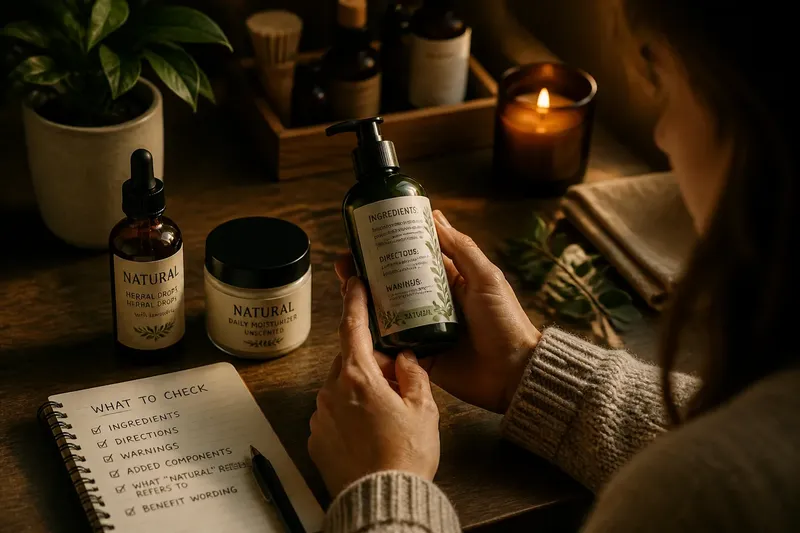
A bottle of herbal drops sits beside a jar of plain moisturizer, both marked “natural.” For natural wellness products, that word may refer to an ingredient’s origin, a production choice, or a brand’s image. It does not tell you by itself what the product contains or whether it suits your needs.
Read “natural” as a prompt to inspect the label, not as a verdict about the product.
What does “natural” mean on this label?
The word has no single meaning across every wellness product. It might refer to a plant-derived ingredient, a fragrance, or the way a product is marketed. If the label does not explain the claim, do not assume it means pure, gentle, or minimally processed.
Look for named ingredients and specific descriptions. “Contains lavender oil” identifies something you can assess; “natural calm” suggests an effect without explaining what the product contains or how it might produce that effect.
Terms such as “organic,” “plant-based,” and “chemical-free” are not interchangeable. Check what the product actually states and defines rather than treating a familiar phrase as a complete description.
Start with the ingredient list, not the mood of the packaging.
Does the ingredient source tell you if it is suitable?
No. A plant-derived ingredient can still irritate skin, trigger an allergy, interact with medication, or be inappropriate in a particular situation. How a product is used also matters: something applied to intact skin raises different questions from something swallowed, inhaled, or used near the eyes.
Consider the full formulation, directions, warnings, and your own circumstances. If you have an allergy, ongoing condition, are pregnant, or have questions about medication interactions, ask a qualified health professional or pharmacist rather than relying on reassuring label language.
Say you are considering a naturally scented lotion and know that fragrance sometimes irritates your skin. You read the ingredients, see that the lotion contains lavender oil, and compare it with an unscented option whose label you understand. Choosing the unscented product avoids the ingredient you are concerned about; if you still have doubts about suitability, you can ask a clinician or pharmacist before using either product.
Use the specific ingredient and intended use to guide the question you ask.
What can the label tell you about the promised benefit?
Naturalness describes, at most, something about origin or presentation. It does not establish that a product will deliver a benefit. A plant ingredient may be useful for a particular purpose, or it may not; the label’s use of “natural” does not settle that question.
Read the benefit claim as carefully as the ingredient list. “Helps soothe dry skin” names an intended outcome more clearly than “supports balance.” The latter leaves the reader to guess what change is meant.
Labels may also mention traditional use, sensory qualities, or a general wellness intention. Those descriptions are different from a clear promise about what the product will do. Keep them in their proper place: they explain how the product is presented, not necessarily what you should expect from it.
Ask what the wording actually promises before deciding whether that promise matters to you.
Which label details could change your decision?
Leaf illustrations, earthy colors, and references to traditional ingredients can create an impression of simplicity. They are not substitutes for directions, warnings, or a complete account of what is in the product.
Check the label for:
- Ingredients: If a component is one you avoid or do not recognize, then compare it with a product whose ingredients are clear, or ask a qualified professional about the concern.
- Directions: If the intended route or method of use is unclear, then do not guess; seek clarification or choose a product with understandable directions.
- Warnings: If a warning applies to your circumstances, then follow it and ask a qualified professional whether another option is appropriate.
- Fragrance and other added components: If an added ingredient concerns you, then compare the label with an alternative that omits it or ask for professional guidance.
- What “natural” refers to: If the label does not say what the word describes, then treat it as a broad marketing description rather than a useful detail.
- Benefit wording: If the promised outcome is vague, then do not treat the wording as a specific reason to expect a particular result.
A short ingredient list is not automatically harmless, and a long one is not automatically unsuitable. The useful question is whether the information lets you make a choice that fits your needs.
What questions do readers ask about natural wellness products?
Does “natural” mean a product is safer?
No. The word alone does not describe how a product may affect you or how it should be used. Check the ingredients, directions, warnings, and your own circumstances.
Can a natural product still cause an unwanted reaction?
Yes. Naturally derived ingredients can cause irritation, allergic reactions, or other unwanted effects. Stop using a product if you have a concerning reaction and seek appropriate medical advice.
Does “natural” mean the product will work?
No. The term describes neither a specific outcome nor whether the product will deliver one. Read any benefit wording separately from the origin claim.
What if the label does not explain the word?
Treat “natural” as a broad description, not as proof of purity, suitability, or benefit. Look for specific ingredients and clear directions, or choose a product whose information answers your questions.
Natural wellness products are easier to assess when you separate three things: what the label says the product contains, how it is meant to be used, and what benefit it suggests. The word “natural” may point to a feature you care about, such as a named plant ingredient or stated sourcing choice. It should not replace the details that let you decide whether that feature is relevant to you.